
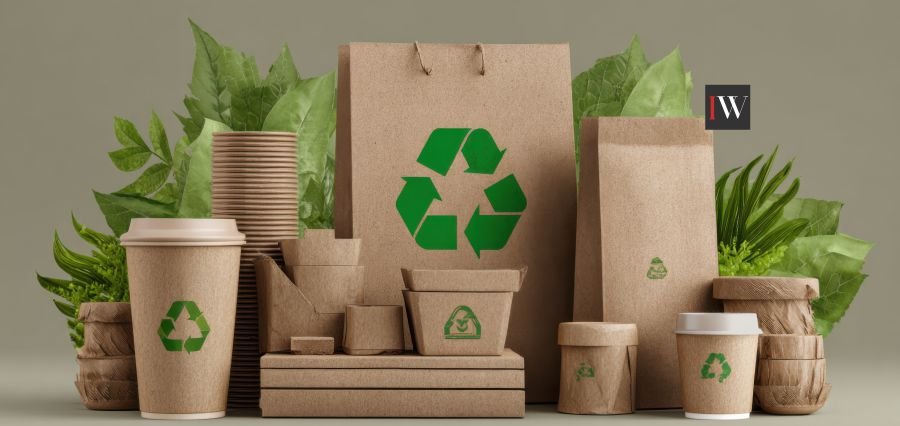
Driving a Smarter Future
The Indian packaging industry is witnessing a paradigm shift quietly but very effectively. For many years in the past, convenience has been at the forefront of everything, with plastic bags, single-use films, and laminates being seen on the shelves of stores in Mumbai as well as the villages. But today, another element is changing the rules completely. The increasing regulations, consumer awareness, and the fast-emerging innovations in materials science are making sustainable green packaging the future of the packaging industry.
A Market at an Inflection Point
The packaging industry in India is worth around USD 50 billion and is set to reach USD 100 billion in value by 2030, making it one of the fastest-growing industries in the Asia-Pacific region. The growth of this sector has resulted in an environmental cost: the amount of plastic waste generated each year in India is 3.5 million tons, and a significant portion comes from packaging. In response to this, the government has established a new Extended Producer Responsibility (EPR) program under the Plastic Waste Management Rules (2022), requiring producers, importers and brand owners to collect and manage post-consumer plastic waste; this will dramatically change the regulatory environment for packaging companies today.
The EPR program exemplifies regulatory approaches to encourage sustainability through the bottom line as well as the use of other forms of regulation geared toward sustainability. Boardroom discussions previously reserved for corporate social responsibility committees now take place due to compliance requirements, consumer expectations, and the reputational risks of ESG reporting.
Innovation as a Business Imperative
What makes the current period unique from other periods of sustainability is how sustainable innovations in packaging have reached a level of sophistication and commercial potential. It is no longer about the simple switch to paper and jute bags. In today’s environment, we can talk about biodegradable bioplastics, water dissolvable pouches, mycelium packaging for cushioning products, and even packaging with crop waste fiber incorporated, all of which function effectively as regular plastic but break down without a trace.
Startups as well as large corporations in India have started investing in this industry with a sense of urgency. One of the most interesting cases is that of Ecoware, an Indian company based out of Noida which manufactures totally biodegradable tableware and packaging material made out of stubble and sugarcane bagasse. The company sells its products to major QSR brands and catering companies of airlines in India. An important lesson that can be learnt from Ecoware’s model of doing business is that of circular sourcing.
Another good case where green packaging innovations have made an impact on specific sectors is Paper Boat deciding to use Tetra Pak’s packaging for certain products – cartons made using bio-based polyethylene from sugarcane, thus minimizing the amount of oil used to make the packaging but not affecting the life of the package or the logistics behind it. This shows that when an FMCG product company at scale adopts something, green innovations have finally made it through.
The Challenge of Scale and Standardisation
Even with genuine progress being made, there are certain structural challenges that will remain irrespective of how much innovation takes place within the industry. For one, there is a clear lack of infrastructure needed for composting and segregating waste in Tier 2 and 3 cities, which is important, considering the effectiveness of compostable packaging relies on the infrastructure in place for processing it in end-use. A compostable pouch thrown away in a landfill with other waste will make little environmental difference from its non-compostable alternative.
Another major issue facing the industry is that of standardization. With no unified Indian standard like EN 13432 in the EU or BPI in the US, it has become very easy to mark packaging as “eco-friendly”, which has negatively impacted both consumer trust and the competitive environment. Efforts to create a standard have been put in motion by industry bodies like Indian Institute of Packaging (IIP).
The Road Ahead
The development of green packaging innovation in India may not be so much dependent on any one big technological breakthrough but rather on the coming together of policies, investments in infrastructure, and supply chain management. Even if there are difficulties in the implementation of EPR, the core idea of producer responsibility is already set in place — an idea which, if implemented rigorously, provides a compelling incentive for redesign.
In this environment of Indian packaging innovation, the key question that needs to be asked is no longer whether there will be sustainable packaging but rather at what speed and depth. This will be the case with those companies who adopt the philosophy of sustainable innovation and not mere compliance.