
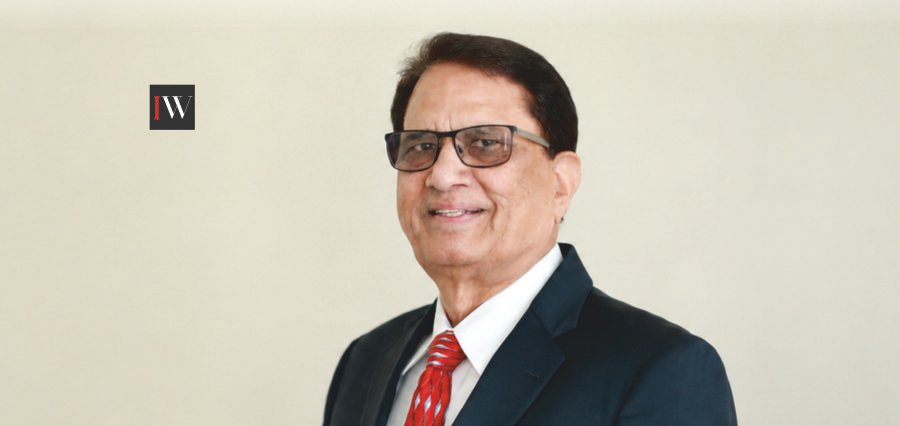
There are a few areas where the virtue of patience pays off better than in the manufacturing industry. Constructing a manufacturing firm is almost always a tale of not overnight success but years of perfecting a craft, building a reputation through repeated deliveries and surviving long enough to turn consistency into trust. There are a few lives where this statement rings true, like the life of Brij Sharma. The President and CEO of PowerVolt, and one of the recipients of the Entrepreneurs of the Year 2024 list, constructed a worldwide transformer manufacturing firm not by adhering to an existing blueprint but by making his own, corrections after corrections and decade after decade. This tale doesn’t start in the corporate offices but rather in a small apartment in Chicago, where a young engineer with virtually nothing chose to construct the legacy in his own hands.
At present, Power-Volt is known for being a supplier of quality power and control transformers, and DC power supplies that conform to UL, CSA, and CE specifications and is known for meeting the demands of those clients that demand accurate design and prompt delivery. In the present time, the company operates through factories in both the United States and Mexico, with a network of vendors in China, and with customers whose businesses hinge on transformer dependability. But statistics and certifications do not tell the whole story. It is a story told through the way that Sharma thinks and operates, and his repeated choice of the more difficult option when the easier one lay before him.
An Engineer First, an Entrepreneur by Circumstance
Sharma never had the idea of being an entrepreneur. As a young man in India, he held two aspirations: to make something of himself or work in the administration of the government. He studied Electrical Engineering because he was truly interested in knowing how electricity flows in the modern system, and after completing his education, he appeared in the exam of Indian Administrative Services. However, he did not succeed.
This failure, far from deterring him, steered him in a new direction. Sharma focused his mind on the subject of his studies, joining Advani Oerikon in Pune to get first-hand industry experience. Through the work, he gained a greater appreciation of what went into making good transformers, the margins of safety and of accuracy required, all the little details that distinguish a great transformer from an average one. There were things he saw, things about poor design, inadequate quality control, and the lack of emphasis on the performance of a transformer when subjected to stress.
Anxious to add further to his technical knowledge, Sharma went to Germany, where he gained a greater appreciation of the engineering mindset there. For ten years, he worked in management for Siemens in Brazil. It was good training, but it only made him more determined to be his own boss. In the early 1980s, he gained enough understanding of the industry, its strengths, weaknesses, and possibilities to want to strike out on his own.
A Company Born in an Apartment
In 1983, Sharma relocated to Chicago, USA, carrying with him years of technical training and a conviction that he could do better on his own terms. Three years later, in June 1986, he founded PowerVolt. There was no factory, no investors, and very little cash. He began building transformers and DC power supplies from his own home, working around a demanding regular job and, to keep his family financially stable, operating a gas station on the side.
For five years, Sharma bootstrapped the business with almost nothing but persistence. There was no shortcut through that period -only long hours, careful reinvestment, and an unwillingness to let the company’s quality slip even while its founder was stretched thin managing three commitments at once. The turning point came when he acquired an existing transformer manufacturing company, a move that gave PowerVolt its first real production footprint.
He sums up that entire chapter in a single recollection: “I started PowerVolt, manufacturing Electrical Transformers and DC Power Supplies, in June 1986, with almost no money in my pocket. Five years later, I moved out of the house to a 10,000 sq. ft. facility,” he says. The line compresses half a decade of sacrifice into two sentences. That transition from a home workshop to a proper manufacturing floor marked the moment PowerVolt stopped being a side project and became a company.
Building a Reputation on Reliability
From that first facility, Sharma set about building PowerVolt into a manufacturer known less for scale and more for dependability. Transformers are unglamorous but unforgiving products: a failure isn’t cosmetic, it disrupts operations, damages equipment, and in some applications, endangers people. Sharma understood that PowerVolt’s long-term survival depended on winning trust one satisfied client at a time, and that trust had to be earned through certification, consistency, and craftsmanship rather than claimed through marketing.
The company pursued and secured UL, CSA, and CE certifications, aligning its manufacturing processes with the strictest international benchmarks. “We are UL, CSA, and CE recognized and approved and are proud to manufacture standard, off-the-shelf, and custom transformers and power supplies,” he notes, and the pride in that statement is not incidental. For a company that started with almost nothing, certification against global standards represented validation that the underlying engineering was sound, not just adequate, but exceptional.
PowerVolt also distinguished itself by refusing to treat every client the same way. Alongside its catalogue of standard transformers, the company built the capability to design tailored solutions for clients with specific technical requirements, an approach that demanded more engineering flexibility but generated far deeper client loyalty. He has consistently prioritized long-term relationships over one-time transactions, backing every sale with after-sales support, technical consultation, and on-site engineering advice when clients needed it.
Optimizing Every Link in the Chain
Reliability, in Sharma’s view, is not only a manufacturing question but a supply chain one. A transformer built to exacting specifications is only as good as the logistics that get it to a client on schedule, and PowerVolt’s growth has depended as much on operational discipline as on engineering skill. He has pushed the company to continuously optimize how it sources materials, manages inventory, and controls costs, treating supply chain efficiency as a direct driver of the value clients receive rather than a background function.
That discipline has paid off in the form of durable partnerships with major industry players. PowerVolt does not chase volume for its own sake; instead, it has focused the company on consistently exceeding the expectations of the clients it already serves, on the theory that dependable execution generates its own referrals and repeat business. Over time, that approach has positioned the company as a preferred supplier among manufacturers who cannot afford production delays caused by unreliable components. Timely delivery, in an industry where a single missing transformer can stall an entire production line, has become as central to the company’s reputation as the technical quality of the transformers themselves.
A Leader Who Works Alongside His Team
Ask anyone who has worked closely with Sharma, and a consistent theme emerges: he does not lead from a distance. Rather than issuing directives from behind a desk, he has built his reputation by staying close to the operational realities of the business, understanding problems from the inside before asking his team to solve them. His guiding principle, one he returns to often, is simple: practice what you preach.
That philosophy extends directly into how PowerVolt treats failure. Sharma has never subscribed to the belief that punishing mistakes produces better outcomes. Instead, he has built a culture where errors are treated as data evidence to be studied so the same mistake doesn’t recur. “We empower and encourage our people, a workforce with more than 20 years associated with PowerVolt to learn from mistakes and avoid punishing them for routine mistakes,” he explains. The result is a workforce with an average tenure exceeding two decades, a striking figure in a manufacturing sector where turnover is often high. People stay at the organization, in large part, because they are trusted to grow rather than punished for stumbling.
This same appetite for difficult problems shapes the company’s project selection. Where many competitors gravitate toward straightforward, low-risk work, he has steered his company toward the complex engineering challenges others avoid. That willingness to take on demanding projects, paired with a strong internal emphasis on teamwork, has carved out a distinct competitive niche for PowerVolt in a crowded transformer market.
Innovation Without Sacrificing the Bottom Line
Sharma is candid about what he believes drives sustainable growth: innovation and disruption, yes, but always in service of an exceptional customer experience and never at the expense of financial discipline. “We at PowerVolt make customer satisfaction our primary goal and insist on innovative processes in engineering, manufacturing, purchasing, and packaging such that profitability is not negatively affected or rather improved,” he says, drawing a direct line between customer-centric thinking and operational efficiency. In his view, the two are not in tension; they reinforce each other when a company designs its processes correctly.
That belief has translated into tangible investment in digital transformation. The company has adopted modern ERP software and expanded automation across its production lines, changes that have meaningfully lifted productivity while trimming costs. For him, staying current with technology isn’t optional polish it’s a competitive necessity in an industry where margins are tight and client expectations keep rising.
Meeting a Global Crisis Head-On
PowerVolt’s capacity for rapid, high-stakes engineering was tested most visibly during the COVID-19 pandemic. When healthcare systems around the world urgently needed transformers to support cold storage infrastructure for vaccine distribution, the firm moved quickly, designing and manufacturing thousands of units to meet the surge in demand. It was precisely the kind of complex, time-sensitive engineering challenge that Sharma’s company had built its reputation on solving.
The pandemic also exposed the fragility of global supply chains, and Sharma responded with a deliberate resilience strategy rather than a reactive one. The firm, as he tells it, moved to implement a multi-faceted contingency plan, describing the company’s decision to establish multiple manufacturing facilities across the United States and Mexico while cultivating a network of five vendor partners in China. That diversification insulated the company from the disruptions that crippled less-prepared competitors, allowing it to keep serving customers through one of the most turbulent stretches the manufacturing sector has faced in decades. Cost-conscious operations, layered atop that diversified footprint, further strengthened the company’s ability to absorb economic shocks.
Advice Rooted in Discipline, not Shortcuts
Sharma views entrepreneurship as central to India’s broader economic story, and he is direct with aspiring founders about what the journey actually demands. He does not romanticize the early years; he acknowledges plainly that building a business from nothing is difficult, often for far longer than founders expect.
His advice draws on an image familiar to many in India -Arjuna’s unwavering focus in the Mahabharata. “Stay focused on your goal- keep your eye on the eye of the fish like Arjuna in the Mahabharata, and work hard with perseverance to achieve it. Success is sure to come,” Sharma says. It is guidance shaped by his own experience of running a business out of his house while working a second job to keep his family afloat – proof, in his own life, that sustained focus eventually pays off.
Looking Toward India’s Transformer Industry
Even with 2024 possibly marking the beginning of an economic slowdown, Sharma is concentrating on what the future holds for PowerVolt and especially how the company will fit into India’s manufacturing industry. The CEO has his eyes set on launching an International Standard Series of Transformers in the Indian domestic market to offer Original Equipment Manufacturers standard transformers that would fit their machines instead of designing special transformers for each project.
“To impact India’s transformer industry, we would like to introduce an International Standard Series of Transformers to the Indian market,” he states, framing the initiative as both a business opportunity and a contribution to the country’s industrial development.
If realized, the initiative would let Indian OEMs reduce design cycles and cut costs, freeing engineering teams to focus on innovation elsewhere rather than reinventing transformer specifications for each new product. It is a characteristically Sharma-style ambition: rooted in practical engineering value, aimed at systemic improvement rather than a single sale, and consistent with a career spent solving problems other manufacturers preferred to sidestep.
A Legacy Measured in Reliability
Sharma’s admiration for the history of electrical engineering runs deep, and he often traces his own motivation back to the pioneers who made modern power distribution possible. He speaks with particular reverence about the invention of the transformer itself, calling it far more than a piece of hardware. “The transformer, therefore, is more than just a piece of electrical equipment; it is a symbol of human ingenuity and a testament to our enduring quest to harness the forces of nature for the betterment of humankind,” he reflects. That’s a sentiment that captures how he sees his own work, not merely as manufacturing but as participation in a much longer human project.
Four decades later since he left India and came to Chicago with nothing more than his engineering degree and his ability to work tirelessly, he is now the founder of a company that makes the same kind of technology that he used to read about from books, and he has done all of this by refusing to compromise on the issues of quality, integrity of the employees, and trust of the customers. Being among the top Entrepreneurs of the Year 2024 does not represent his success due to any one thing; rather, it represents the sum of a thousand such decisions that he has taken over the course of thirty-eight years. From his basement workshop and filling station to his present manufacturing facility operating worldwide in the US, Mexico, and several international partners, the rise of PowerVolt has mirrored the values of its founder.